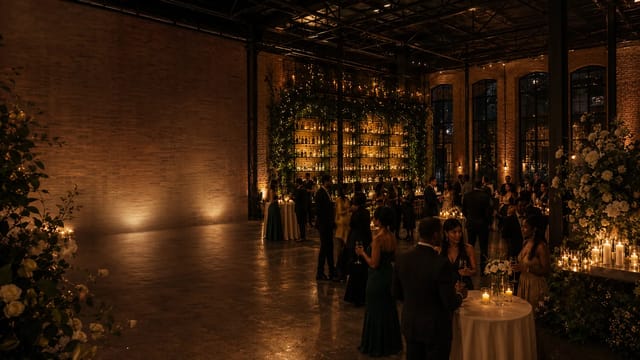
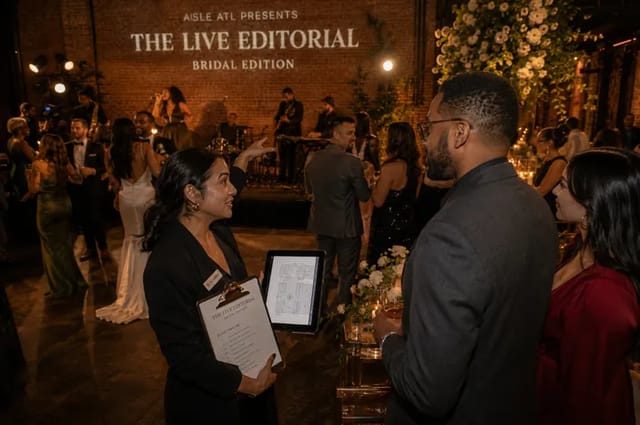
A media launch concept that turns an editorial theme into a live experience, with sponsor participation modeled through attendance, engagement, and booking economics.
THE CHALLENGE
Publishers are already turning content into live events.
Magazine advertising has fallen sharply, and publishers are responding by building events, not just cutting costs.Women's Health became a fitness festival.Country Living became a lifestyle fair.National Geographic put its storytellers on stage.Events are no longer a side project. They're a real revenue category.
THE OPPORTUNITY
Turn an editorial theme into a live experience where sponsors are part of the guest journey, not separate from it, and their impact can actually be measured.
The Live Editorial applies this model to a bridal launch. The same formula could work for any editorial theme: pick the content, build the matching live format, integrate the right sponsors, measure what guests actually do.
WHY THIS MODEL
01
PRINT PRESSURE
U.S. magazine advertising revenue fell from about $10B in 2017 to $4.3B in 2025.
2017$10B
2025$4.3B
STATISTA · 2025
02
EVENT REVENUE
70% of publisher professionals reported generating at least some revenue from events in Q1 2025.
DIGIDAY+ RESEARCH · 2025
03
EDITORIAL → LIVE
Publishers including the Financial Times, Women’s Health, Country Living, and National Geographic have turned editorial brands into recurring live experiences.
FT STRATEGIES · FIPP · HEARST
GUEST JOURNEY
A six-step journey connecting event participation to measurable guest actions and sponsor follow-up.
01
Invitation
Introduces the visual concept and sets expectations before the event.
02
RSVP
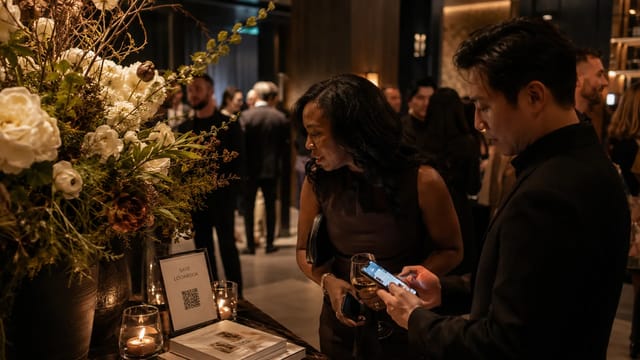
Captures individual guest preferences and contact information before arrival.
03
Check-In
Confirms attendance and connects each guest’s RSVP record to the live experience.
04
Reception
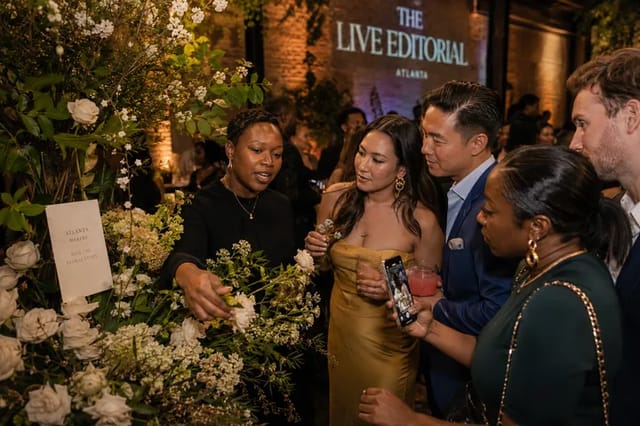
Integrates sponsors into the event itself rather than treating them as separate advertising.
05
Next Step
Lets guests save the vendors or experiences they want to revisit after the event.
06
Follow-Up
Uses each guest’s expressed interest and consent to guide sponsor-specific follow-up after the event.
EXPERIENCE SYSTEM
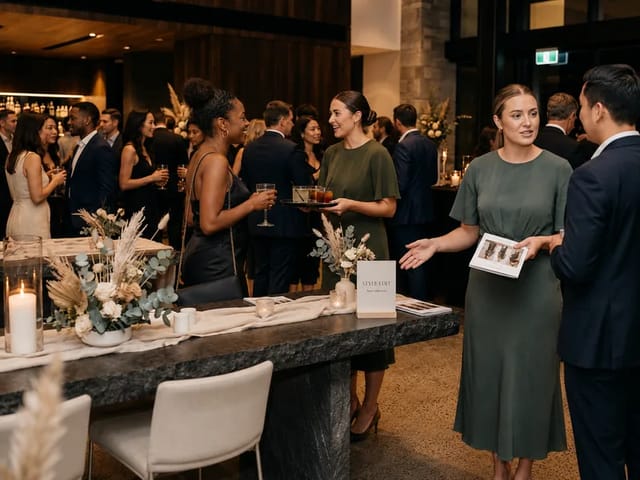
One reception, not a row of sponsor activations.
Each proposed sponsor plays a distinct role within the guest journey.
Sponsors would contribute products, services, or production support in-kind, with each contribution integrated into the guest experience rather than presented as a traditional vendor booth.
SPONSOR ROLES
Six proposed sponsor roles designed to support the reception while creating distinct opportunities for guest interaction.
01
01. Flowers
Sets the visual tone guests photograph, putting the florist in front of an actively planning audience.
02
02. Planner
Coordinates the reception's flow, giving the planner visible credit for making the night work.
03
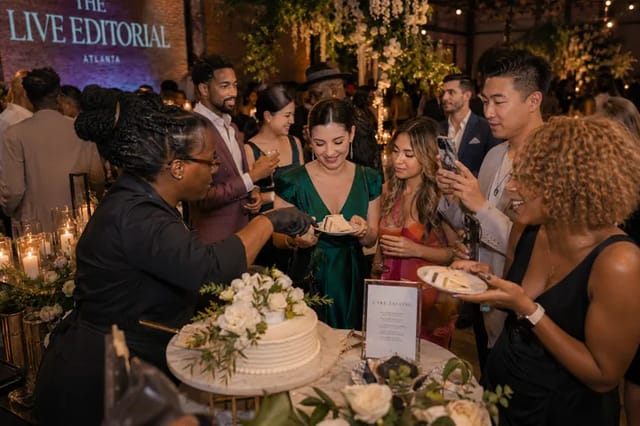
03. Cake
Makes tasting part of the reception, turning product trial into a direct guest interaction.
04
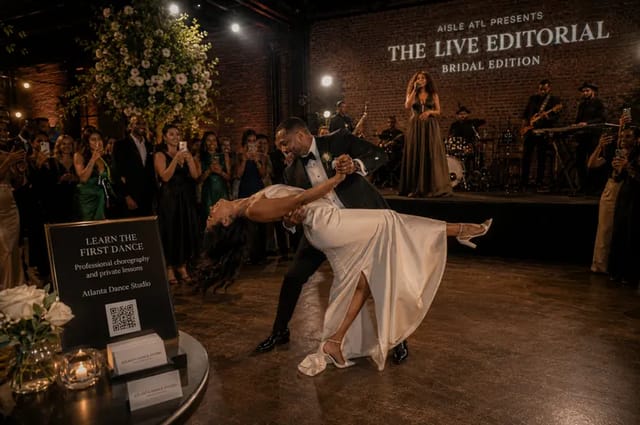
04. Bridal Fashion
First Dance
Places bridal styling inside a highly visible moment of movement, emotion, and attention.
05
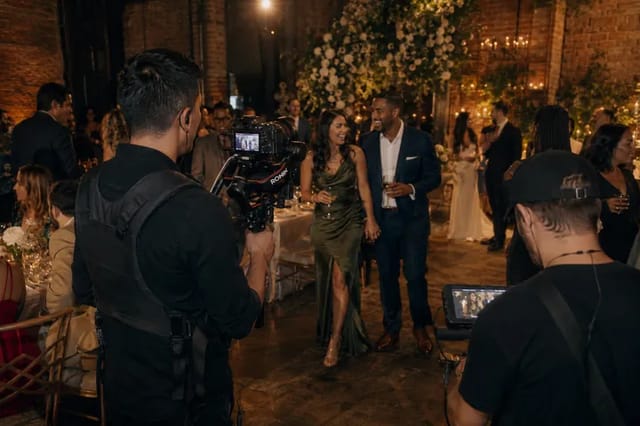
05. Videographer
Captures the reception in motion, producing content that can extend the experience beyond the event.
06
06. Bridal Boutique
Shows fit and movement in the live experience, bringing the product off the rack and into context.
ENGAGEMENT LAYER
an additional touchpoint beyond the six core reception roles.
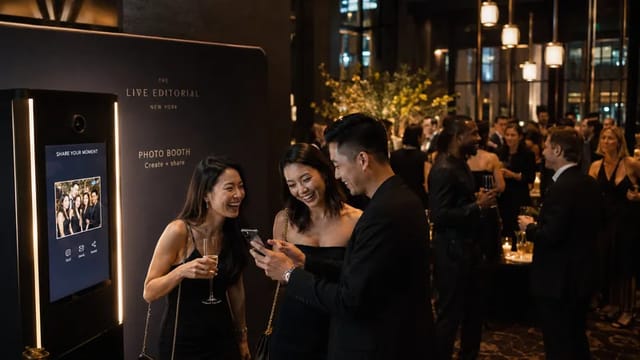
Photo Booth
Gives guests a keepsake while creating a branded interaction they can choose to share.
THE ROOM
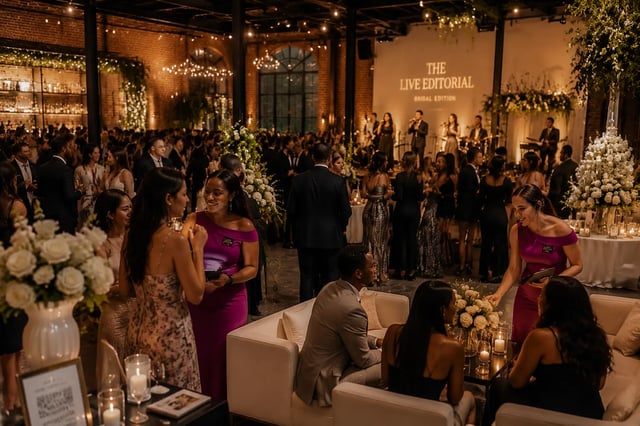
Nobody in the room is thinking about sponsors. They're thinking about the florals they want to recreate, the cake they want to taste, the dress moving under the lights during the first dance. The brands are just where the moment happens to live.
MEASUREMENT SYSTEM
MEASUREMENT FRAMEWORK
From guest presence to clearer sponsor signals.
Being in the room is one signal. Choosing to act is another.
01
01. ATTENDANCE
The guest checks in.
SIGNALConfirmed attendance.
02
02. ENGAGEMENT
The guest interacts with a sponsor moment.
SIGNALAn early indication of interest.
03
03. CONSENT
The guest gives permission for sponsor-specific follow-up.
SIGNALSponsor-specific consent.
04
04. EXPRESSED INTEREST
The guest submits an inquiry or requests more information.
SIGNALSponsor inquiry.
↓DERIVED FROM THE ABOVE.
OUTPUT
POTENTIAL VALUE
Sponsor-specific inquiries can inform scenarios of potential value.
Sponsor value was modeled by estimating how event participation could translate into bookings under different assumptions. These figures are not measured results or forecasts.
Modeled at 60 attendees, using conservative-to-optimistic engagement and conversion assumptions.
PlannerStrong return · breaks even at 1 booking
Photo BoothStrong return · breaks even at 1 booking
VideographerModerate return · breaks even at 1 booking
Cake DesignerNear break-even · breaks even at 2 bookings
These are scenario outputs based on modeled assumptions, not measured results or actual ROI.
DetailsHow this was modeled
Returns improve as more guests engage and convert, especially for sponsors with lower participation costs. For example, the Planner would need only one booking to cover its modeled contribution, while the Cake Designer would need more. Sale values and cost benchmarks are sourced from industry data (IBISWorld, The Knot). Attendance, engagement, and conversion rates are modeled scenario assumptions, not measured benchmarks. The biggest unknown is whether guests would give sponsor-specific consent at the assumed rate.
THE TAKEAWAY
The Live Editorial turns a wedding reception into a live extension of the bridal theme, with sponsors woven into moments guests naturally experience. The same idea could flex to other editorial themes, using different formats while keeping sponsor integration and measurable guest actions at the center.
Independent case study, not affiliated with or endorsed by the publishers or brands referenced. Sponsor value figures are based on modeled assumptions, not measured results.
Sources (10)Statista, Digiday+, FIPP & more
Where this came from.
01Statista. "U.S. Magazine Advertising Revenue." Supports the decline from about $10B in 2017 to $4.3B in 2025.
02Digiday+ Research. "Publishers Look to Cash In on Growing Events Revenue." Supports the finding that 70% of publisher professionals generated at least some event revenue in Q1 2025.
03FIPP. "Events in Magazine Media: How to Convert Them into a Revenue Source." Documents magazine publishers using events for sponsorship, audience growth, and revenue, including Hearst, Women's Health, and National Geographic.
04FT Strategies. "Going Live: How Events Are Powering Growth for Media Companies."
05FIPP. "Hearst UK Launches Women's Health Live Festival." Closest real-world precedent for the Live Editorial concept.
08The Knot. "Average Wedding Cost" and "Wedding Cake Cost." Used for wedding-category value benchmarks in the sponsor value model.
09WeddingPro. Lead-to-booking benchmark data, used as a scenario anchor for the model, not a guarantee of conversion.
10IBISWorld. Industry reports referenced for underlying vendor cost logic, including Patisseries and Cake Shops in the US and Meeting, Convention, and Event Planners, accessed via Kennesaw State University library databases.